Build a clear noise diary before talking to neighbors or landlords.
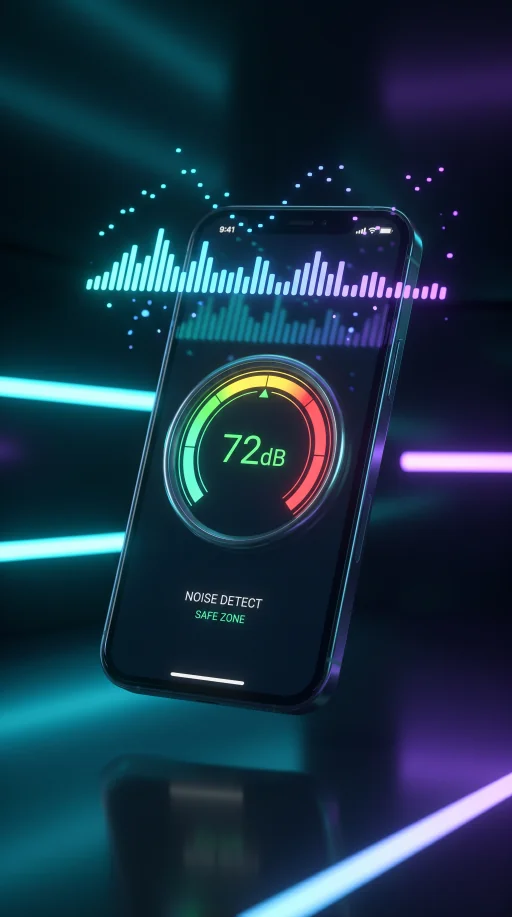
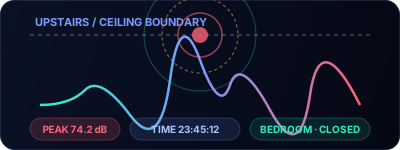
Capture repeated noise events with dB trends, timestamps, evidence photos, optional recordings, GPS or room notes, and exportable reports.
What to record
Capture the time window, room, window state, repeated impact sounds, music, pets, HVAC, or night disturbance patterns.
What SOUNDTEST.PRO adds
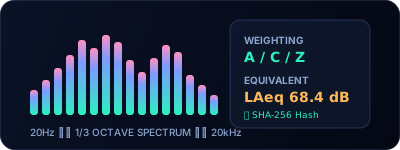
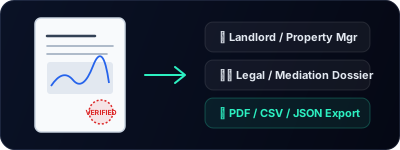
dBA/dBC/dBZ, LAeq, L10/L90, manual event marks, evidence photos, optional audio/video, PDF, CSV, and manifest hashes.
How to share
Export a concise PDF summary first. Keep precise coordinates private unless you intentionally include them.
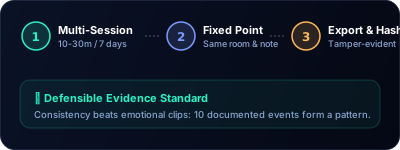
Three habits that actually work
- Use multiple short sessions instead of one vague complaint.
- Record from the same room and note doors/windows.
- Save media files promptly from the Records page.
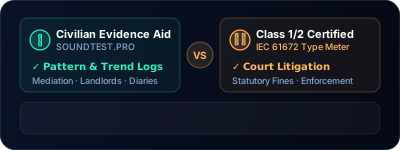
Acoustic measurement limits
SOUNDTEST.PRO is designed for civilian field documentation and mediation packets. For formal court litigation or statutory nuisance enforcement, verify with a calibrated Class 1 / Class 2 sound level meter.
Frequently asked questions
Can phone recordings be used as evidence of neighbor noise?
In most jurisdictions, audio you record in your own home without trespassing is admissible as supporting evidence, not as a definitive legal proof. Pair recordings with timestamped dB trends, photos, and notes about the time and date to make them more useful in mediation, landlord discussions, or small-claims hearings. SOUNDTEST.PRO is a documentation-grade estimate tool, not a certified sound level meter; verify any formal claim with calibrated equipment.
What decibel level is considered harassment from a neighbor?
There is no single universal number. WHO public-health guidance treats sustained exposure above roughly 55 dB indoors as a sleep-disturbance risk, and most city nuisance ordinances treat repeated nighttime disturbance above 70 to 85 dB as actionable. The right threshold depends on your local ordinance, lease terms, and the pattern (single loud event vs. repeated intrusion). Document dB, time, and duration, then check your local rules before escalating.
How long should I record noise from a neighbor before making a complaint?
Multiple short sessions across several days are far more persuasive than a single long recording. Aim for 10 to 30 minutes per session, repeated over at least a week, capturing both the worst moments and quiet baseline. This produces a defensible pattern of behavior rather than a one-off snapshot.
Should I talk to my neighbor first or start documenting?
Both, in parallel. A friendly heads-up can resolve the issue without escalation, but start documenting immediately because casual conversations have no paper trail. SOUNDTEST.PRO records are time-stamped and exportable, so they cost nothing to keep even if you never need them.
SOUNDTEST.PRO is a documentation-grade estimate tool, not a certified sound level meter. Verify any formal claim with calibrated equipment and qualified measurement procedures.